

“And these words that I command you today shall be on your heart. You shall teach them diligently to your children, and shall talk of them when you sit in your house, and when you walk by the way, and when you lie down, and when you rise.”
Deuteronomy 6:6–7
The Bible is clear: we are called to pass down the truth of God’s Word to the next generation. This is not a suggestion only for the pastors, professors, or theologians; it is a command for every believing parent. Yet, when it comes to the doctrine of the Trinity, many of us hesitate. We shy away from the topic for various reasons.
Usually, we shy away for two reasons: inadequate knowledge and underestimating our children’s ability to understand.
Inadequate Knowledge
First, we feel inadequate in our own understanding. We worry that if our children ask, “How can one be three?” we won’t have a clever enough analogy to satisfy them, and it will just expose how little we know about the Trinity.
Do not be discouraged. Many of the most brilliant saints throughout church history spent their lives marvelling at the mystery of the Trinity without ever exhausting it. However, don’t be content and stop there. The Trinity is the foundation of all Christian doctrine. As Michael Reeves beautifully puts it in his book Delighting in the Trinity, “God is love precisely because He is a Trinity—a Father eternally loving His Son in the Spirit, and that love overflowed in creation.”
In other words, to know God is to know the Trinity, and to know the Trinity is to know God. Knowing this Triune God deepens our joy and satisfaction in Him.
While the doctrine is profound, there are several basic ways to deepen our understanding of the Trinity:
- Love and savour the Bible, reading it every day, paying close attention to how God is progressively revealed as three Persons in one God.
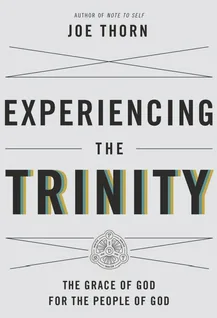
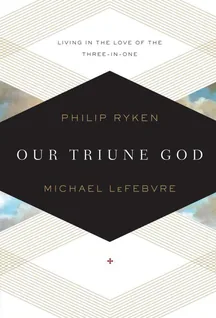
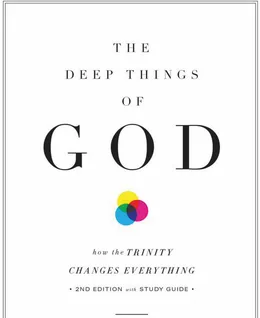
- Read good books about the Trinity. I encourage you to check out the recommended resources found in this third edition of Dew Magazine.
- Commit to a healthy church, where the Trinity is worshipped. This includes a holistic diet of corporate Scripture readings, expositional sermons from both the Old and New Testaments, Trinitarian corporate prayers, and ordinances that display the Trinity. This does not mean every sermon is on the Trinity, but rather that each message is sensitive to the text whenever it reveals something distinct about the Father, the Son, or the Holy Spirit.
Underestimating Our Kids’ Ability to Understand
Second, we assume that children simply cannot grasp a complex doctrine. We decide to wait until they are “older,” but in doing so, we miss the foundational years of their spiritual formation.
We are mistaken if we think children cannot understand the Trinity. While they may not grasp the technical Latin terms, they can understand the language of relationship—of a Father who loves, a Son who saves, and a Spirit who dwells within.
With these convictions in mind, here are some practical ways to teach our children to know, love, and enjoy the Trinity.
Teach While They Are Young
When my son, Abraham, was just three years old, I asked him, “Who are the persons of God?” and he answered confidently, “Father, Son, and Spirit.” Then I asked, “Why did God make us?” In his sweet three-year-old tatter voice, he answered, “For His laundry!” We laughed, but even in that adorable mispronunciation of “glory,” a seed was being planted. By the time he was eight he conversed confidently with his classmates about God, Jesus and creation, able to stand up for it in conversations with non-believers.
If we wait until they are “old enough,” we miss the years when their hearts are most receptive. As Proverbs 22:6 reminds us,
“Train up a child in the way he should go; even when he is old he will not depart from it.”
Start with the Basics
Teaching the Trinity doesn’t have to be complicated. You don’t need a Master’s from the Gulf Theological Seminary; you just need to be intentional. (Although if you can do both, by all means, do it.) You can begin with the historic tools the church has used for centuries: creeds, confessions, and catechisms. These provide an easy-to-remember grammar that helps children categorize what they see in the Bible.
You can also use your church’s statement of faith as a starting point and build from there. Read it together and look up the supporting verses.
Another great exercise is to read the Gospel of John with your children. John’s Gospel is uniquely focused on the relationship between the Father and the Son. As you read, ask them: “What is the Father doing here? What is the Son saying about the Father? How will the Spirit comfort the disciples or convict the world of sin?” We often treat the Trinity like a theological calculation. But the Trinity is not a math problem for us to solve, but a glorious fellowship to be enjoyed. Imagine if our kids could truly see this.
Model It in Family Worship
Theology is often “caught” as much as it is “taught.” Our children need to see that the Trinity matters to us in our daily lives.
In your Bible reading, when you encounter the Father, Son, or Spirit, pause and highlight their distinct roles. Help your children see that the Father plans, the Son accomplishes, and the Spirit applies our salvation.
In your singing, introduce songs that celebrate the Triune God.
In your prayer, model a Trinitarian prayer by mentioning each Person specifically. Instead of always using the generic name “God” or “Lord,” try to be specific about whom you are praying to. For example:
“Father, thank You for choosing us and sending Your Son, Jesus, to live and die to save us. Lord Jesus, thank You for Your perfect obedience and Your sacrifice on the cross. Holy Spirit, thank You for removing our hearts of stone and giving us new hearts to believe in the person and work of Jesus. Thank You for helping us understand the Bible today. We pray this in Jesus’ name.”
Be Creative
We named our daughter ‘Trinity’! Noting that her brother’s name is in the Bible, she would ask, “Is Trinity in the Bible?” One of her favourite songs became “Holy, holy, holy” as it mentions the blessed “Trinity.”
Conclusion
Teaching our children about the Trinity is one of the greatest gifts we can give them. It protects them from a “generic” or “unitarian” view of God that can feel distant or cold. Instead, it introduces them to a God who has been loving and relational for all eternity.
Our kids might start out thinking God made us for His “laundry,” but as we diligently teach them, they will grow to see that we were made for His “glory”—the shared, overflowing glory of the Father, the Son, and the Holy Spirit.
This article first appeared in Dew Arabia Edition Three: The Trinity, pages 40–41.