
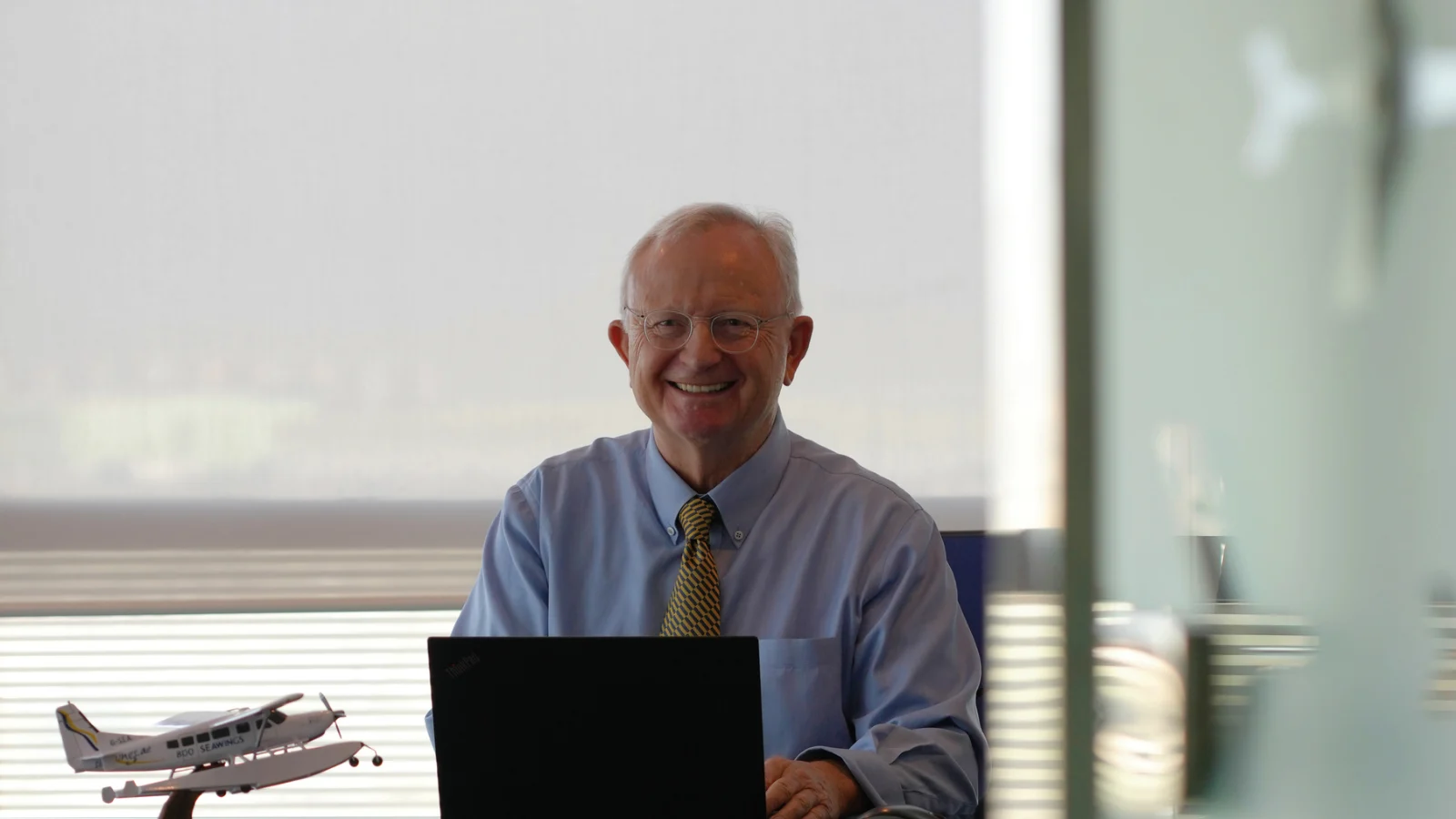
Stuart is something of a rarity in Dubai – and within our church community. With his distinguished grey hair, he stands out in a much younger crowd. Naturally, we were curious to hear about his journey in the UAE—how long he has been here, whether he was already a believer when he moved, and how his faith has grown within the region’s distinctive business culture.
Stuart leans back in his office chair on our Zoom call, smiling—as he so often does—and begins to reminisce about a Dubai that feels like another world altogether:
“My wife and I officially moved here in 1989. Dubai was very different in those days!”
In answering if he was already a believer when he moved here, Stuart goes back to his childhood. “Faith was always a part of my life. I was raised in an evangelical church, attending every Sunday.
“After university, when I moved to London, I attended All Souls Church, Langham Place. That was John Stott’s church,” he explains. “The teaching there was unbelievable. So when I came to Dubai, I was really looking for that same depth of biblical preaching.”
Was it easy to find a church in Dubai back then?
“There were not too many churches. We joined one in Oud Metha. After a few years I started attending the gatherings of a church with only about 50 people,” he estimates, “in a modest small villa. I was deeply impressed by the teaching. Their focus was singular and unwavering: the gospel. It was, and remains, the only agenda.”
Stuart continues with sharing how this small villa church eventually received its own building. “After much prayer, the government, in a wonderful gesture of kindness, granted us land. ‘We have good news,’ the Elders said, ‘we have land. The bad news is, it’s in Jebel Ali!’” Stuart laughs at the memory. “Now, you have to remember that back then, Dubai ended at Safa Park, so Jebel Ali felt like the end of the moon!”
The UAE is known for its value of tolerance. From your experience, how has this become reality and shaped the ability to practice your faith?
“After we received the land, the church building still had to be built,” Stuart notes. “I remember one of our church members, who owned a tile factory, donated the floor tiles. It was a significant sacrifice. To this day, every time I step into the church, my eyes are drawn to those tiles. They are a silent testament to that man’s generosity—a tangible reminder that this church stands on the foundation of many such sacrifices. We are, truly, walking in the footsteps of others.”
It is clear that Stuart enjoys talking about the UAE and the context in which the church has taken root here. “The concept of freedom of worship here is relatively recent, perhaps only the last 25 years. So, when you walk on those tiles, you should remember the sacrifices people made.
“Our church building may be relatively new, but it stands in the legacy of the missionaries of the 1960s and ’70s, who braved the desert, building hospitals, serving local people with midwifery. Imagine what life was like then, so completely different, such a harsh environment. The hardship they faced. And even earlier, in the 18th and 19th centuries, people endured so much to build what we are benefiting from today. That is intentionality.”
Do you still see this intentionality in our church today?
“It is displayed before us weekly!” Stuart states without hesitation. “Consider our pastors, elders and each person who faithfully serves the fellowship each week.” As an illustration of this, Stuart shares a memory that has never left him. “A colleague of mine, who started attending with me, once pointed out the pastor’s car: a small, aging blue Honda (or Toyota). He said: ‘I can’t believe that man. He could have been wealthy, yet here he is, driving a small second-hand, rather old car!’ That car was a visual image of intentionality. Look at any of our pastors, who have transplanted their entire families for years of service, and you see that commitment lived out. My respect for them is immense.”
How has being surrounded by such purpose transformed you?
“I have a reference point in having such people around me,” Stuart explains. “I remember at the inauguration of the Church building the message was clear: ‘The church is not a social club. It is a light on a hill. It’s a place where we can be directed, discipled, corrected and uplifted – and where we can encourage others. But it is not a social club,’ he warned,” even though the temptation to reduce it to that is always there.
Thinking for a moment, Stuart continues. “How has it changed me? Through the consistent gospel teaching and these real-life examples I have around me!
“My everyday prayer is: ‘Don’t let the business world conform me. Instead, let me be conformed to Your image, God. Give me opportunities to speak into people’s lives.’ Because love isn’t just a feeling; it’s an action.”
Stuart shares how this leads to a weekly self-audit: “What impact did I have? What sin must I confess? Church is really the pillar of my life! A stabilising force, keeping my life rooted in God and giving me strength. We are all so vulnerable!”
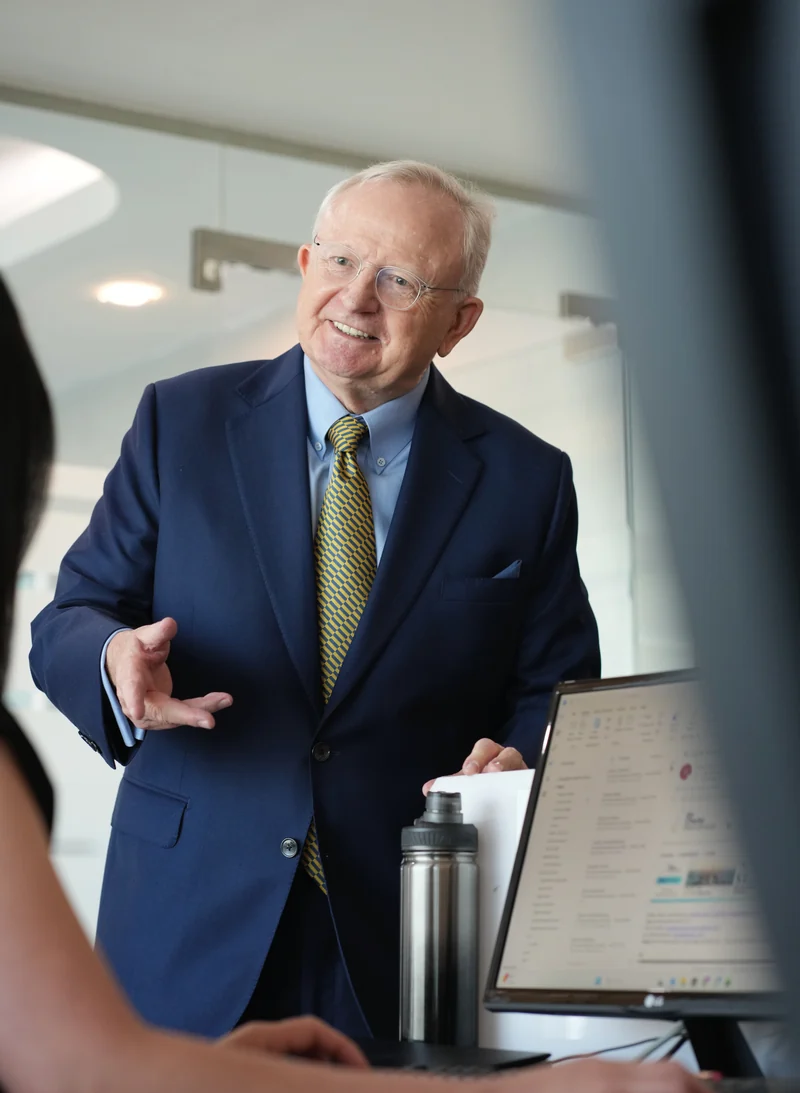
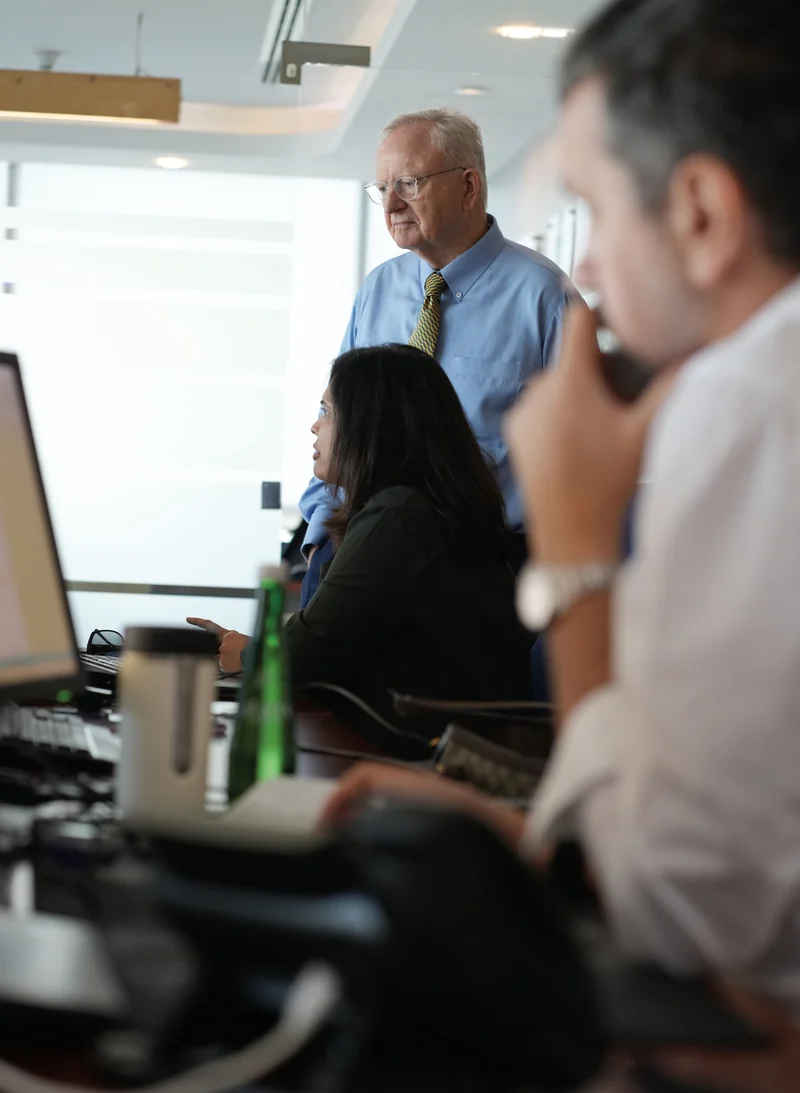
In what ways are you vulnerable?
Without a moment’s pause, Stuart answers. “I’m flawed. In many ways,” he shares openly. “In my work, for example, there have been decisions made without first consulting God. I followed my own will, and it was a mistake. Yet, God’s faithfulness has been constant. I don’t pray for business success, I pray that I may be a good witness for Him and that He would give me wisdom.”
Is it a conscious choice to avoid praying for business success?
“Absolutely,” Stuart affirms. “How could I possibly pray: ‘Lord, make me rich’? No! My concern is for the people under my care. In difficult seasons, a kind of question-and-answer with God echoes in my mind:
“‘Have I nourished you, spiritually and physically?’ Yes, Lord!
“‘Have I kept you safe?’ Yes, Lord!
“‘Have I placed you in a position where you can speak to other people?’ Yes, Lord!
“Then it is as if God says: ‘Okay, trust Me. Just trust Me.’
“With every business crisis, that is the reminder. ‘Trust Me!’ So, I trust Him. My striving is not to be conformed by business, but to be conformed by Him.”

How do you resist being conformed by business instead of by Christ?
“What is different about a Christian?” is the rhetorical question Stuart asks in return. “God’s command is: Love God above all. The second is to love others as ourselves. That means shifting focus from oneself to God and how you can build others up. Being a follower of Christ must be evident in your life and speech, unambiguous and unashamed!” Stuart is not describing a private standard of his own, but the clear, biblical pattern for every believer.
“If you are a Christian, it should be evident that you are a follower of Christ – through your life and your speech. It needs to be very clear. You cannot be ashamed of Christ. And, oddly enough, here in the Middle East it’s often easier to discuss spiritual matters than in places like Europe.
“It all comes back to trust. Trusting God. God is sovereign and in control; yes, also in the bad times—a truth I’m reflecting on while reading Job at the moment.”
What encouragement would you offer to Christians across the UAE and the wider region?
“My wife has a friend who messages us daily with a Bible verse, a practical reflection, and a note of praise to God through the ordinary—the break of dawn, a garden flower, her cat’s adventures. She finds a way, every day, in joy or sadness, to praise God. And I share this as an example to two young girls who are the lights of our lives. I want them to see a woman who walks with God, praising Him daily, even amidst agony, worry, and sickness. I pray every day that they grow in the knowledge of God. He desires to be known. And as you know Him, you will praise Him and you will bear fruit.”
Stuart’s encouragement to Christians across the UAE and beyond is to pursue a deeper knowledge of God, trusting that this will lead to Scripture-shaped praise. As we grow, our praise of God will be reflected in how we think, speak, and live with the people around us.
“One of the joys I have is to walk around the block and talk to whoever I meet: gardeners, homeowners, anyone sitting on the side of the road. Be the person who consistently expresses the love of God.” Stuart is very clear, “The main thing is the main thing: the gospel! Our lives must reflect that.”
This interview first appeared in Dew Arabia Edition Two: Sovereignty of God, pages 24–27.