
I have heard the question so often that it no longer startles me. But I must admit it wasn’t always the case. It is the favourite rebuttal against the claims of Christianity, or, call it, the supposed “knockout punch” against belief in the existence of God. “If there is God, why is there so much evil and injustice in the world?” It is an age-old question, and there is nothing novel about it. However, like all the fundamental issues of life, Scripture is not silent on this question. One can go to many places in the Bible to address this question, but one that I have recently found helpful and thought-provoking is Proverbs 19:3.
I am sure some new believers grapple with the brokenness of this world and perhaps, in their quiet moments, wonder why there is so much pain and suffering in the world when the Bible speaks so much of a powerful and omnipotent God. Can’t He stop all the carnage and make everything right? I’m sure there are well-meaning people with such a genuine question. However, in my experience, this question doesn’t often come from a place of faith, seeking understanding. Instead, it often comes from those who have scores to settle with the idea of God and are looking for evidence to reinforce their viewpoint. It is because of this that I find Proverbs 19:3 so apt.
“When a man’s folly brings his way to ruin, his heart rages against the LORD.”
At the core of our depravity as human beings is the tendency to blame someone else for all our problems. I don’t need to prove the validity of this statement because each of us is a walking proof. We blame our friends, parents, teachers, siblings, or neighbours for all the mishaps in our lives. When something goes wrong in our lives, the first thought that runs through our mind is, “whose fault was it?” It is the same logic behind the question, “if there is God, why is there so much evil and injustice in the world?”
The Legitimacy of the Question
From the face of it, it sounds like a legitimate question. At least there is an acknowledgement that there is evil in the world, and someone should be doing something or should have done something about it. In this case, that someone is presumed to be the God of Christianity; otherwise, He is not God or powerful enough. As legitimate as that question may sound to some people, I do not believe it is. The right question should be, why is there so much evil and injustice in a world that looks so beautiful? That is the real question that needs to be answered because the existence of evil in the world is not proof against the existence of God; instead, it only proves His existence.
This is because even for those who seek to deny the existence of God, there is a deep acknowledgement that this is not how the world is supposed to be. But even so, a more fundamental question is, why would a non-believer feel so strongly about good and evil anyway? After all, if everything is random and there is no divine Creator, why do they care? It’s all a matter of the survival of the fittest; “eat or be eaten” is the name of the game. But that is not how even the average atheist views life. Despite their godless world view, they somehow acknowledge that there is good and evil; the standard by which they arrive at those categories is still a mystery to me.
Why Is There Evil in the World?
But for the Christian, the present state of the world is not at all a mystery. Scripture is very clear on where we came from as humans, why we are where we are, and the solution available to those genuinely looking for answers. When one considers the current state of the world, it is tough to conceive that there was a time in history when God saw everything that He had made and exclaimed, “it was very good” (Genesis 1:31). But, yes, there was such a time when man flourished because he lived under God’s rightful rule and authority. That is why the right question is not, “if there is God, why is there so much evil and injustice in the world?” But instead, “how did such a once very good world become so evil?”
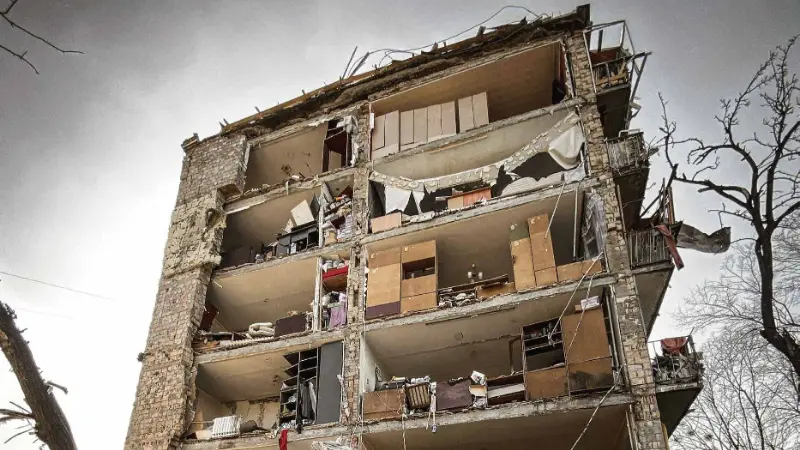
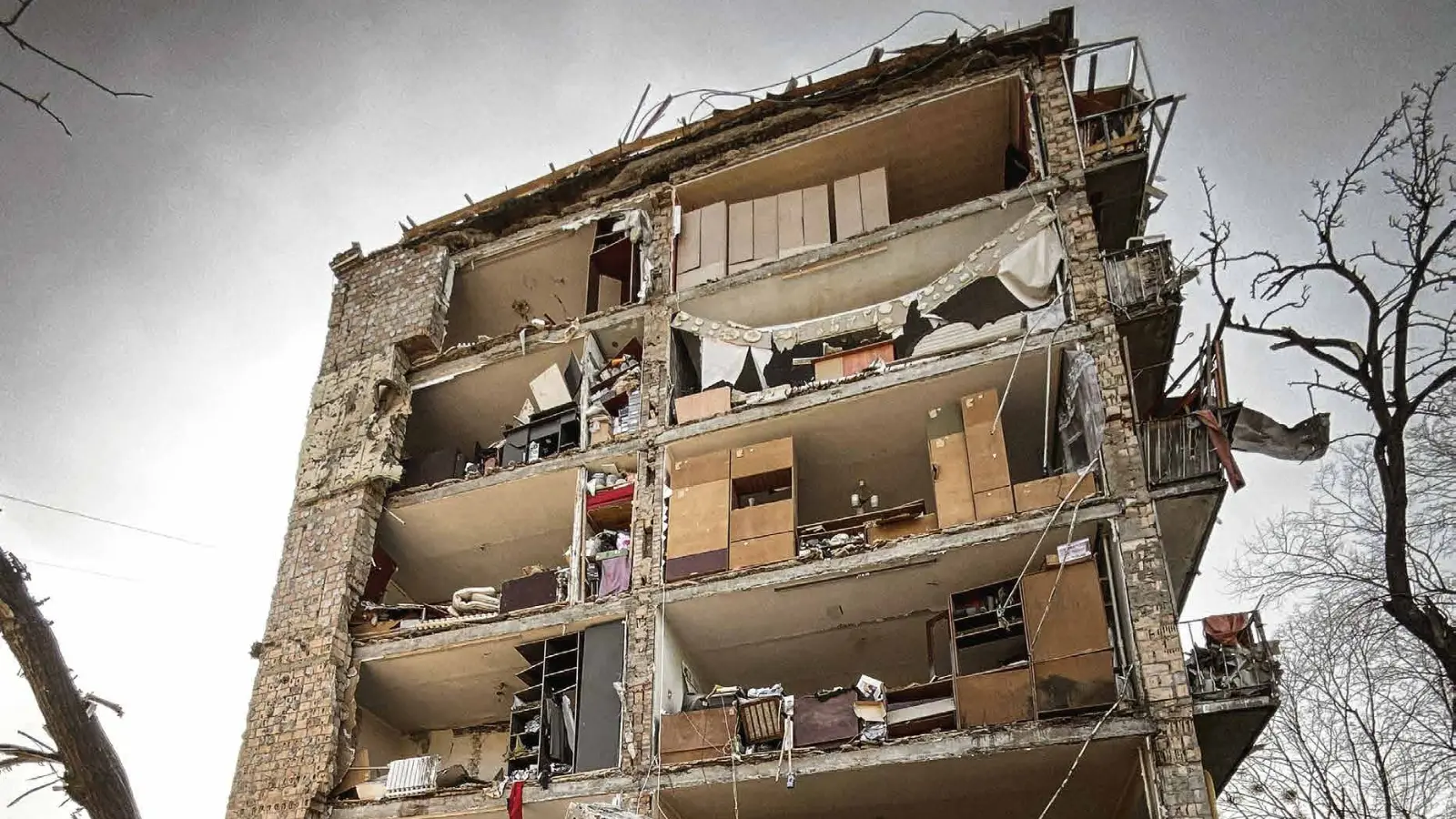
Genesis 3:1–15 explains in detail how we got to where we are today. Yes, God did create a very good world; however, when man used his freewill to reject God’s rightful rule and authority, the world was plunged into its present chaos and predicament. From Ukraine to Gaza, Somalia to Myanmar, Libya to Haiti, and Nigeria to Venezuela, what we see in our world today is because God has withdrawn His presence. In simple terms, evil could be described as the absence of good. That is precisely where the world is today. When God withdraws His presence or hides His face, the result is evil. We see this teaching in countless places in the Scriptures (Deuteronomy 31:17; Ps. 30:7; Isaiah 59:1–2; 64:7).
This is why Proverbs 19:3 is instructive: “When a man’s folly brings his way to ruin, his heart rages against the LORD.” In our folly, we have abandoned God’s design for marriage and wonder why divorce and domestic abuse are increasing. We have thrown God’s blueprint for parenting out of the window and replaced it with our own clever ways of rearing children, and yet wonder why depression among teenagers is on the rise. We have replaced God’s idea of community with a self-centred individualistic approach to life and yet wonder why loneliness and suicide are so rampant. We fill our minds with violence and sexual images through our inordinate consumption of mindless entertainment and wonder why war and sexual abuse are ravaging our world.
But we should make no mistake: the fact that God has hidden His face does not in any way suggest He is no longer in control over what happens in the world. He will forever remain the sovereign Creator and Ruler of the world. Instead, hiding His face is a sign of judgment, the full outpouring of which would be at the end of the age against the world and its system that continues to reject His authority. The chaos and upheavals we see in our present world are only a faint echo of the full judgment that is yet to come (2 Peter 3:9–13).
God Indeed Has a Solution
Behind the question, “if there is a God, why is there so much evil?” is the posture that sees God as a divine maid with a mop in hand who goes about cleaning up the mess we create as humans. On the one hand, we have rejected His design and blueprint for life, yet, on the other hand, we have the guts to ask why He is not cleaning up after us. And we get mad and vindictive if He doesn’t clean up after us. We have removed all the guardrails but are still looking to be kept safe. This is precisely what the wise man was talking about: “When a man’s folly brings his way to ruin, his heart rages against the LORD.”
But the good news is that God is a good God. In His mercy and kindness, He has not left us to our own evil devices. He is making a new world, one that is far better than this one. In Revelation 21:1–4 we read,
Then I saw a new heaven and a new earth, for the first heaven and the first earth had passed away, and the sea was no more. And I saw the holy city, new Jerusalem, coming down out of heaven from God, prepared as a bride adorned for her husband. And I heard a loud voice from the throne saying, “Behold, the dwelling place of God is with man. He will dwell with them, and they will be his people, and God himself will be with them as their God. He will wipe away every tear from their eyes, and death shall be no more, neither shall there be mourning, nor crying, nor pain anymore, for the former things have passed away.”
This present broken world is not all that there is. A new one is coming where the question will no longer be asked, “if there is a God, why is there so much evil?” Because God will not withdraw His presence; in fact, He will be in the midst of the city, and anyone who makes it into that world will gladly and joyfully submit to His rightful rule and authority. “God himself will be with them as their God. He will wipe away every tear from their eyes, and death shall be no more, neither shall there be mourning, nor crying, nor pain anymore, for the former things have passed away.”
Published on The Gospel Network - tgnghana.org
This article first appeared in Dew Arabia Edition One: Suffering, pages 18–21.